Course overview
Build the skills and knowledge needed to operate a forklift safely and prepare for the LF high risk work licensing assessment in NSW.
What you will learn
- Relevant workplace safety requirements and hazard controls
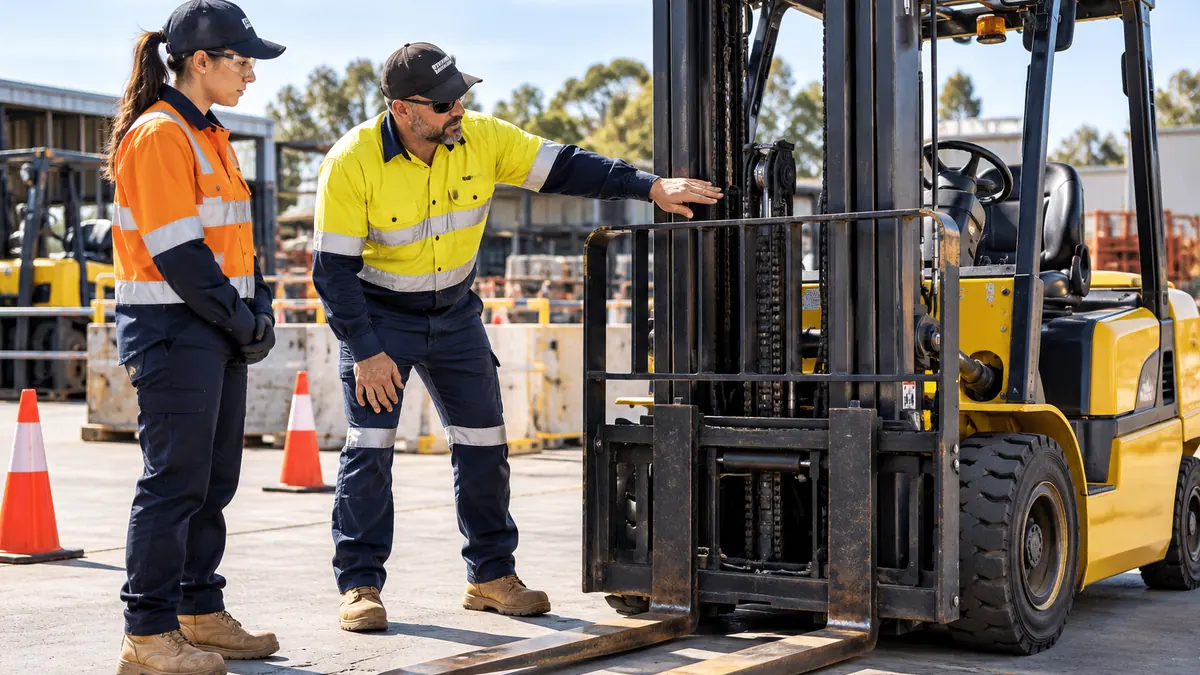
- Forklift pre-operational inspections and risk assessments
- Safe load handling, movement and positioning
- Safe forklift operation in different working conditions
- Procedures for shutting down and securing equipment
Entry requirements
Please see below
Nationally recognised training
Nationally recognised training
This course includes the nationally recognised unit TLILIC0003. Assessment and certification are subject to the applicable training, licensing and RTO requirements.
Who this course is for
People who need forklift skills and LF high risk work licensing for roles in warehousing, logistics, manufacturing and other workplaces.
Course outcome
Students who successfully complete the training and assessment requirements for TLILIC0003 may receive a Statement of Attainment from the delivering RTO. Any applicable high risk work licence is separately issued under the relevant regulator's requirements.
Course details
Why Students Choose Us
-
Free Pre-Course Study Materials – Get access to learning resources before your course starts so you can prepare and feel confident.
-
Hands-On Practical Training – We focus on real workplace skills, not just theory.
-
Small Class Sizes – More one-on-one support and time on the equipment.
-
Flexible Scheduling – Weekday, weekend, and night classes available to suit your needs.
-
No Hidden Fees – What you see is what you pay — no surprise costs or add-ons.
-
Modern, Industry-Standard Equipment – Train on the same gear used on real job sites.
-
Nationally Recognised Training – Your qualification is valid anywhere in Australia.
-
Experienced, Friendly Trainers – Our trainers genuinely care about your success and guide you through every step.
Click here to see more - How the forklift course works!
Course Description
Upon successful completion of this course, you will fulfil all the requirements for obtaining a national High Risk Work Licence (Class LF) for forklifts. This license will authorise you to operate various types of forklifts, including counterbalance, reach trucks and high-reach forklifts, within Australia.
Course Outcomes
This set of skills and knowledge covers various aspects essential for operating a forklift safely:
1. Understanding Workplace Health & Safety Legislation and Operating Procedures.
Obtain a forklift licence by thoroughly understanding legal obligations, workplace safety protocols and operational guidelines for forklift use.
2. Identifying hazards, assessing risks and implementing control measures.
Learn to spot potential hazards, assess risks and implement effective control measures to ensure safety in dynamic work environments.
3. Planning work activities involving the use of a forklift.
Develop critical planning skills to coordinate safe and efficient forklift operations.
4. Awareness and management of overhead hazards.
Identify risks such as low ceilings or hanging objects and learn methods to mitigate them effectively.
5. Conducting pre-start operational checks on the forklift.
Conduct detailed pre-operational inspections to ensure the forklift is safe to use.
6. Reporting damages and defects in the forklift.
Learn how to identify and report mechanical issues or defects, reducing downtime and preventing accidents.
7. Utilising effective communication methods in the workplace.
Master verbal and non-verbal communication techniques for seamless coordination with coworkers.
8. Understanding load data plate specifications.
Understand how to interpret forklift load capacities and operational limits accurately.
9. Determining load weight and Safe Working Load (SWL).
Learn techniques for determining load weights, maintaining stability and adhering to the Safe Working Load (SWL) limits.
10. Advanced manoeuvring skills
Practice lifting, moving and stacking loads safely across various conditions and stack heights.
11. Handling emergencies.
Be confident in addressing unplanned or unsafe situations with calm, informed decision-making.
12. Conducting post-operational checks on the forklift.
Ensure forklifts are properly inspected and documented after use to maintain optimal functionality.
13. Properly shutting down and securing the forklift truck after use.
Master the correct steps for shutting down and securing the forklift to ensure workplace safety.
Forklift Licence Course – Prerequisites
At FHV, we want every student to be set up for success. Before enrolling in our forklift training course (LF Licence), please ensure you meet the following requirements:
Minimum Requirements
-
Age: You must be at least 18 years old at the time of assessment.
-
Language, Literacy & Numeracy (LLN): You must have basic reading, writing, and numeracy skills to complete written assessments and understand safety signs, procedures, and manuals.
-
Identification: You must provide valid photo ID (e.g., driver’s licence, passport, Keypass).
USI – Unique Student Identifier
You must have a USI number before training begins. You can create or retrieve yours at usi.gov.au.
️ Health & Safety
Participants must be physically fit and able to safely operate a forklift, including sitting for extended periods, turning their head, and operating manual and foot controls.
️ PPE Requirements
To attend practical training, you must wear:
-
Steel cap boots
-
Hi-vis clothing or vest
-
Long pants
Frequently asked questions
What is a forklift licence?
A forklift licence is a nationally recognised certification authorising individuals to operate forklifts safely and legally. It demonstrates competence in handling various forklift types, following safety protocols, managing loads and complying with workplace health and safety regulations, ensuring the operator meets industry standards for high-risk work environments.
How do I obtain a forklift licence?
To earn a forklift license in Sydney, enrol in a nationally recognised training course covering theory and practical forklift operation. Complete the training, pass the assessment and meet legal requirements such as proof of identity. Successful participants receive a High-Risk Work Licence (Class LF), authorising forklift operation in compliance with regulations.
What are the prerequisites for getting a forklift licence?
The prerequisites for obtaining a forklift license in NSW include being at least 18 years old, possessing basic literacy and numeracy skills and having valid photo identification. No prior forklift experience is required, but participants must complete training in the registered class with a registered training organisation (RTO) and pass theoretical and practical assessments.
How long does it take to complete forklift training?
Forklift training typically takes 3 days to complete. This timeframe includes theoretical and practical components, ensuring participants gain comprehensive knowledge and hands-on experience. At FHV, our structured 3-day course prepares you thoroughly for the assessment, enabling you to obtain your forklift licence efficiently and confidently.
Is there a written test for a forklift licence?
Yes, obtaining a forklift licence includes a written test. The test evaluates your understanding of safety regulations, workplace procedures and operational guidelines. This theoretical assessment and practical training ensure you possess the knowledge and skills to operate forklifts and comply with industry standards safely.
What is included in forklift training courses?
Forklift training courses include theoretical lessons on safety regulations, load management, workplace procedures and hands-on practical training. Participants learn pre-start checks, safe lifting techniques, manoeuvring, stacking and shutdown procedures. The course also covers hazard identification, risk assessment and communication skills, preparing operators for licensing and workplace demands.
Are forklift licences valid nationwide or region-specific?
Forklift licences in Australia are valid nationwide, as they are part of the High-Risk Work Licensing system. This ensures operators can legally and safely work across all states and territories, provided they adhere to local workplace health and safety regulations and maintain current certification requirements.