Course overview
Practical industry-focused training with course requirements, training information and enrolment options from FHV Driver Training.
Entry requirements
There are no prerequisites for this course
Course details
Course Description
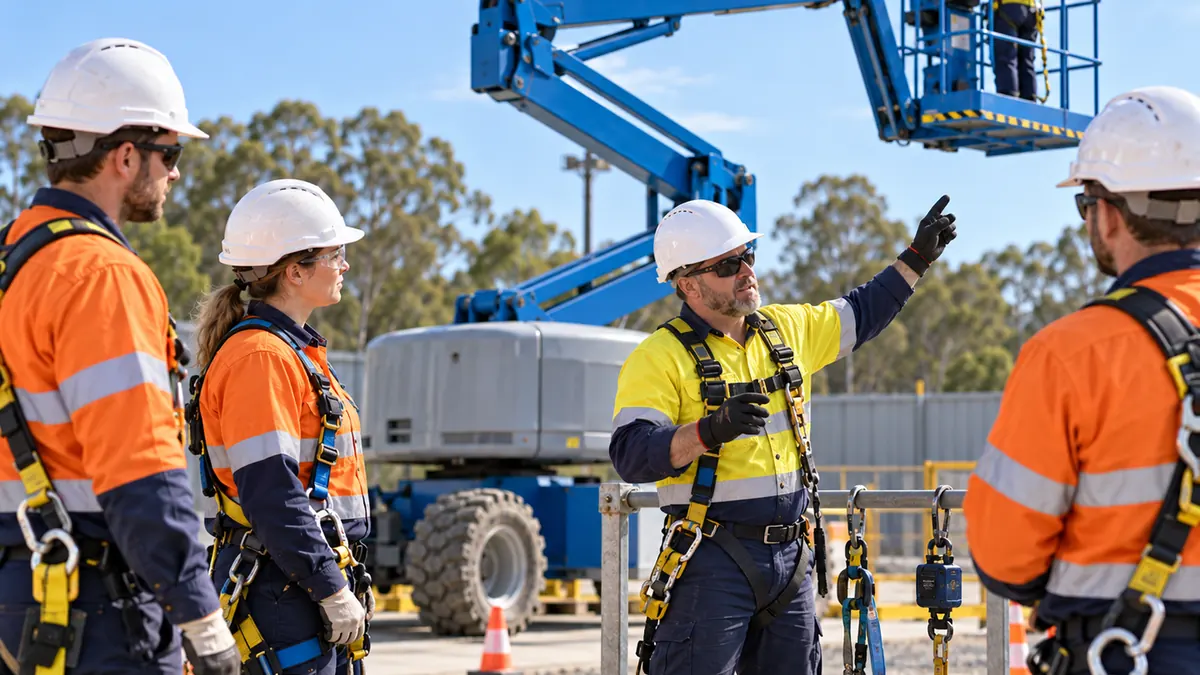
This course equips participants with the necessary skills and knowledge to safely operate a boom-type Elevating Work Platform (EWP) with a boom length of 11 meters or more, in compliance with all relevant legislative requirements. It's important to note that completion of this unit does not automatically lead to the issuance of a High Risk Work Licence for operating this plant. A boom-type elevating work platform encompasses a telescoping device, hinged device, or articulated device, or any combination thereof, utilized to support a platform for elevating personnel, equipment, and materials.
Course Outcomes
This list provides a comprehensive overview of the key components covered in a course related to operating a boom-type Elevating Work Platform (EWP). It includes:
1. Occupational/Workplace Health & Safety Legislation and Operating Procedures.
2. Hazard Identification, Risk Assessment, and Control Measures.
3. Planning Work activities involving the EWP.
4. Awareness and management of overhead hazards.
5. Pre-start Operational Checks on the EWP.
6. Reporting damage and defects in the equipment.
7. Inspection of safety equipment associated with the EWP.
8. Understanding and utilizing EWP safety devices.
9. Determining load weight and Safe Working Load (SWL).
10. Evaluating ground suitability and proper positioning and set-up of the EWP.
11. Knowledge and application of outriggers/stabilizers and packing.
12. Handling unplanned and unsafe situations.
13. Post-operational checks on the EWP.
14. Proper shutdown and securing procedures for the EWP.
Course topics
- Requirements for HRW Licence.
- OH&S Legislation (Acts, Regulations and Duty of Care)
- Application of Australian Standards and National Standards.
- Selecting Lifting Equipment
- Inspecting Lifting Equipment (i.e. prior to use)
- Deciding on Slinging Methods
- Directing Crane Operators (when loads are out of view)